How to not suck (at dance)
So I like to dance. I got into it in college, and have been so blessed by all the experiences dance has brought into my life.
I got into dance through choreography. This was a great entry point, but an issue with learning choreography is that it doesn’t make you a better dancer in the real world. For example, dancing at the club is raw and improvised - its all about connecting with others in the moment with your movement. Dancing at the club requires being good at freestyle. And guess what - I’m terrible at freestyling.
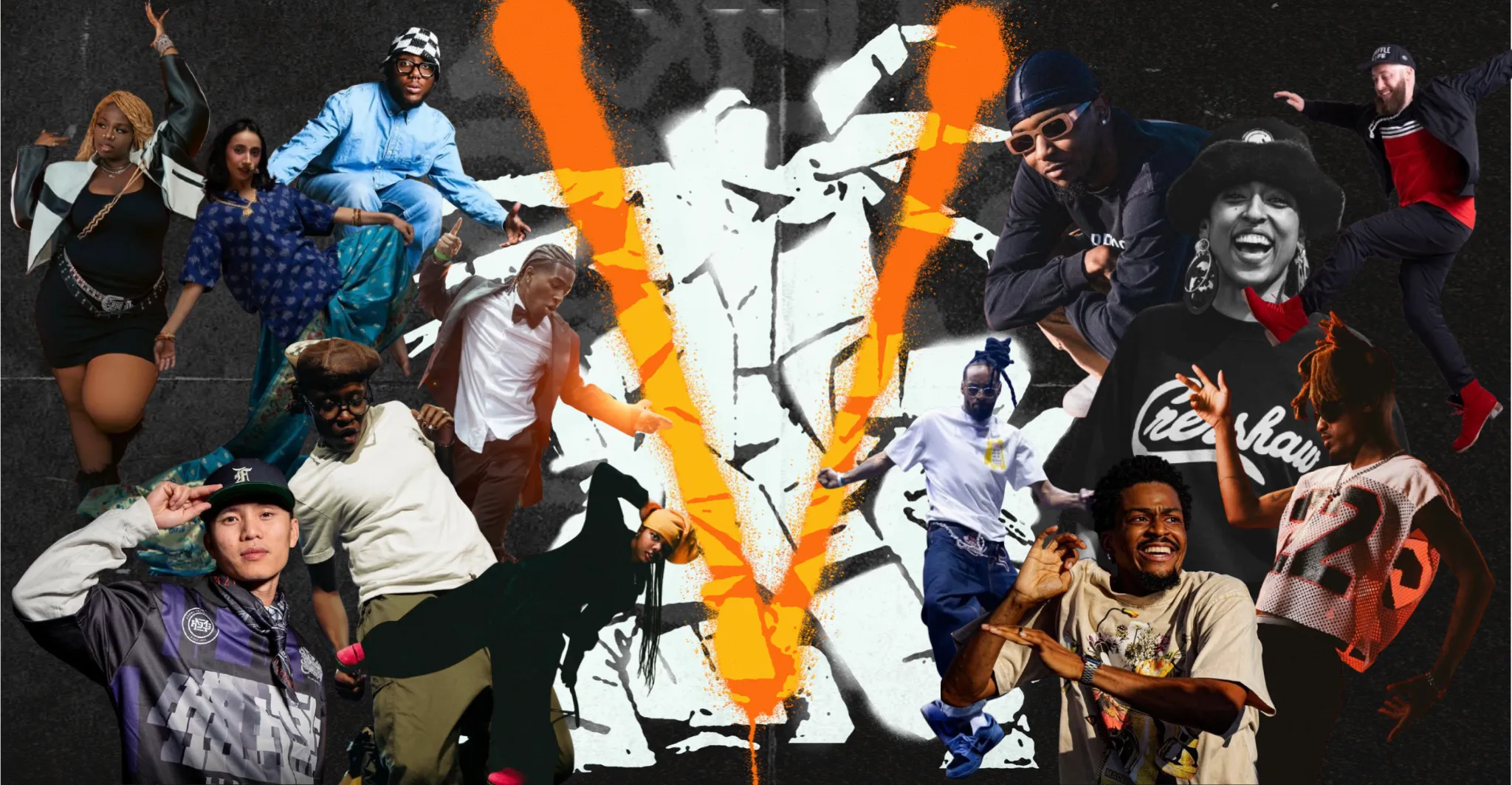
My inability to freestyle has always been a bit embarassing to me. But not embarassing enough for me to set goals and timelines in order to actually improve my skillset. This all changed this year, because of an annual dance battle in Chicago called Windy City Throwdown (WCT).
Windy City Throwdown focuses on Hip Hop, but has a battle called Footwork Frenzy which would let me compete with House. Although I’m not great at freestyling, I do have some experience with House - this meant that competing in Footwork Frenzy would be a perfect goal to strive for!
This article is about how I trained for this battle. You may think this is only interesting if you’re a dancer, but I disagree - I think this is interesting if you’ve ever wanted to do something hard! You’ll see how I:
- created an analytical framework to understand the problem (what makes for a good freestyle?)
- strategized my approach
- executed the plan
If you’re worried about your attention span, well I have lots of videos for you. And if you’re just interested in tech, you’ll see a personal app I built to assist this journey.
Let’s go!
What is a battle?
Dance battles are a way for dancers to showcase their skill, artistry, and story in a competitive environment. You may have already seen battle videos on social media - these clips tend to be incredibly popular! Here are a few examples of amazing dancers doing rounds for House battles:
The videos of the rounds above come from different stages within a battle. Most battles have two stages:
Stage 1: Prelims When you have hundreds of people enter a battle, how do you separate the wheat from the chaff? Prelims let every entrant quickly showcase their skills. You get a predetermined amoutn of time (like 45s) to dance to music from a DJ. Judges assign scores, deliberate, then select the top X dancers to move onto Top Cut. These rounds are NOT head to head, and are instead done sequentially in order to get through many dancers quickly. | Animation of a dance battle prelim: 16 dancers each take a turn on stage, are ranked, and the top 8 advance to the top cut. |
Stage 2: Top Cut The great dancers who qualified from prelims get to flex their mastery during Top Cut. This involves head-to-head battles where each dancer gets multiple rounds dancing to music. Judges determine winners from each head to head, eventually resulting in an overall winner. | Animation of a 8-dancer single-elimination bracket: each round one dancer per match is chosen at random to advance, until a single winner is crowned. |
I was able to go to Windy City Throwdown IV last year, and I cannot adequately describe the skill of the competitors. There were so many amazing movers that various tie-break rounds had to occur in order to settle on a Top 16 bracket.
In order for me to do anything, I need goals. And because I’m delusional, my goal for this year was to make it out of Prelims.
So… what does it take to freestyle well?
This could be a whole dissertation… and I am by no means an expert. But from what I’ve been able to experience, I believe great freestyling boils down to three components:
There’s limitless depth to each of these and they are so deeply intertwined, but let me give a brief run-through of each. To be clear, this is MY framework - it may be wrong, and it certainly doesn’t encompass all of what great dancing is. If you have feedback, please let me know! I am a student in this and want any guidance that I can get.
Musicality
Dance is all about how we express music and intent through our bodies. Musicality is a dancer’s ability to hear AND represent the music, and it’s far more sophisticated than you might expect. In my mind, there are two fundamental components (and if you read on desktop, a cool example to illustrate what I mean):
- Hearing all of it - music is composed of layers, with each sound contributing something to the tapestry. The first step to developing great musicality is being able to pick up on the individual sounds and understand the patterns underneath. You can hear how each component of Now or Never builds to create the final product.
- Making choices - once you can hear everything, you must choose what to highlight within the music and how to highlight those components in order to represent the music through your perspective. You could hit everything — but like with most things, doing less can be much more. In addition, different sounds have different characteristics - what kinds of movement best capture the ‘essence’ of that sound? And beyond that, if there are lyrics, how do you want to represent the message of the song in your movement? As you listen to Now or Never, you will naturally gravitate to certain sounds and will want to emphasize those. With those sounds, try to visualize what each sound ‘looks like’. Practicing this (even just mentally) will help guide your body when you actually try to dance!
Now or Never — Boddhi Satva & Erin Kimberly (Gregor Salto Radio Edit)
as you listen, think about how each component builds on the others!
- Drumsthe pulse
- Bassthe grooveUnmute Drums first
- Musicmelody & chordsUnmute Bass first
- Vocalsthe voiceUnmute Music first
Press play — you'll start with just the drums.
Interactive layered audio player for "as you listen, think about how each component builds on the others!". Press play to start with drums, then unmute each stem — drums, bass, music, vocals — to build the full mix one layer at a time.
Freestyling in a battle context adds one more requirement to Musicality: Pattern Recognition. Because freestyling requires dancing to music you likely haven’t heard before, the ability to quickly understand the patterns in the music is critical. Quick predictions enable you to make thoughtful choices within a very short time. If you can predict what comes next, you can better plan your freestyle and be more layered with how you dance.
Movement
So music is the foundation, but Movement is how you express the music. What does your body do in order to evoke your inner world externally? How do you take a sound and capture its essence with motion?
I think there are three dimensions to Movement, and how it contributes to freestyling:
- Repertoire — do you actually have knowledge of the “foundations” that make up a style? Club and Street styles allow for a lot of individual expression, but that doesn’t mean there aren’t foundational movements. The foundations are a shared vernacular that expresses what culture the dance comes from. Dance is inherently cultural, so to dance well you must respect its history. And to respect its history, you must have knowledge of the foundations.
- Quality — beyond just knowing the moves, can you do them well? Everyone’s body is different: how do you tailor the movement to your frame? How do you make even the “basics” exciting to watch?
- Flexibility — once you have a repertoire of movements you do well, how do you add variations to find your own voice, or give a better voice to the music? This can involve variations within the movement itself, or in the transitions in and out of movements. I think of Flexibility as your ability to take notes and scales (the basics) and make jazz out of them.
Performance
Finally, the last thing to remember about dance is that it’s a social experience — we dance because it lets us connect with others. Even if you’re dancing in front of a crowd, engaging with that crowd at a human level is critical. Great dancers are great storytellers, and are able to have the crowd in the palm of their hands. There are two parts to this:
- Phrasing and Energy Control — as with stories, dancing requires phrases. Think about how the stakes and tension of a story build over time before a release. We do this because it’s incredibly effective at engaging other humans. Dancing is the same way: great freestyling uses movement to express the shape of the music while controlling the energy of the room and releasing it at the ideal moment(s). A dancer I want to highlight is L2K — his background is in Litefeet, which is conducive to building to an explosive finale, and he is an absolute MASTER at that.
- Personality — dance is also all about personal expression: how does your movement reflect YOU? One thing humans love is being entertained, and people with larger-than-life personalities are entertaining. A great example is ESolo and his “Tio Freestyle”, but I also think Zhané is a master at this. She has an incredible repertoire of movement, but what she is best at is absolutely commanding our attention via her larger-than-life personality.
That’s a lot of theory. So let me make it concrete: here are a few dancers I adore, each with very different approaches. I’ve picked a freestyle from each, and analyzed why they’re so incredible using the framework established above:
| Category | Feature | Score | Notes |
|---|---|---|---|
| Musicality | Hearing | 9 / 10 | I'd characterize this song as more vocals-led, with the beats offering some accents behind Tiller's vocals. Goosie takes that and makes the vocals the centerpiece of the freestyle, while accenting various beats throughout the larger phrases. |
| Musicality | Choosing | 9.5 / 10 | There are some CRAZY choices being made here, both across the sounds of the song and the words themselves. My favorites are the dive forward they do, and the “playing my song” section. It's goofy, but Goosie COMMITS — and that's what makes it land. |
| Musicality | Pattern Recognition | 10 / 10 | Goosie hits so many things in here it's insane. Knowing where the vocals are going while also capturing the various beats in the background takes masterful pattern recognition. |
| Movement | Repertoire | 0 / 10 | |
| Movement | Quality | 0 / 10 | |
| Movement | Flexibility | 0 / 10 | |
| Performance | Phrasing/Energy | 0 / 10 | |
| Performance | Personality | 10 / 10 | Such a unique vibe, but Goosie is masterful at controlling the crowd by injecting their own brand of attitude into the freestyle. |
| Category | Feature | Score | Notes |
|---|---|---|---|
| Musicality | Hearing | 0 / 10 | |
| Musicality | Choosing | 10 / 10 | I think the best moment of this freestyle is actually not even tied to the music at all, but instead tied to Ruthie riffing off of what the MC said! The earring removal is CRAZY, and although not strictly tied to musicality, still fits within the wider freestyle and music! |
| Musicality | Pattern Recognition | 0 / 10 | |
| Movement | Repertoire | 10 / 10 | Ruthie's bag is just so deep. Although this particular freestyle may not be the best example of that, even here you can see her depth in the variety of styles she is able to pull from even for just small moments. |
| Movement | Quality | 10 / 10 | In addition to her wide repertoire, Ruthie is excellent at actually doing the movements. The years she has spent honing her craft are clear in how she moves. She is so good, that she's even able to push the energy in her movements to the absolute edge without them losing their groove and feeling. |
| Movement | Flexibility | 10 / 10 | Due to her extensive experience in so many different styles, not only can she do many movements, Ruthie can also quickly switch between them while making them all look natural and appropriate. |
| Performance | Phrasing/Energy | 0 / 10 | |
| Performance | Personality | 10 / 10 | There is a level of absolute comfort that Ruthie displays when she's on stage. Her energy and skillset allows her to absolutely command attention, and that is very clear when you watch her move. |
| Category | Feature | Score | Notes |
|---|---|---|---|
| Musicality | Hearing | 10 / 10 | Nimbus is the musicality master! The particular song he's freestyling too also helps him showcase his skill with musicality due to the various beats and instruments that make up the backing track. At various points in this video, I think he manages to emphasize/play with every single sound in the track! |
| Musicality | Choosing | 10 / 10 | Did you even see the head shake he does? I mean, that is just inspired. |
| Musicality | Pattern Recognition | 10 / 10 | His ability to play with all the different components of the track require unbelievable pattern recognition. He takes his time to deconstruct all the various layers, then is able to masterfully weave in and out of the different layers. |
| Movement | Repertoire | 10 / 10 | Nimbus has a deep back of different foundations, but his freestyle tends to not rely on a specific library of moves, but instead using his various abilities to accent music in various different ways. For example, throughout this freestyle, he does moves that aren't 'moves', but rather unique movements building on other things he is able to do. |
| Movement | Quality | 0 / 10 | |
| Movement | Flexibility | 0 / 10 | |
| Performance | Phrasing/Energy | 10 / 10 | In addition to his excellent musicality, one thing I really admire about Nimbus is his ability to construct a phrase across larger components of a freestyle. For example, the amazing head isolation moment hits so hard because leading up to it, he was doing very large, high energy moves. Contrasting this with the much smaller isolations is critical in order for a move that 'simple' to land. |
| Performance | Personality | 10 / 10 | Each dancer I used as examples performs in a very different way. Nimbus's performance hear leans on subtlety and playfulness in order to land the concepts. He knows that his musicality is excellent, so his performance doesn't distract from that. HOWEVER, he is still able to show his personality even with smaller facials. |
Strategy
Great, now we have a framework! The thing is, I only decided to start training 3.5 weeks before the competition. In order to make it out of Prelims, I need a strategy, and this strategy has to factor in my timeline, my goal (making it out of prelims), and my current strengths and weaknesses.
So what am I good at?
I have strengths in Musicality, though I am weak in Pattern Recognition - after all, my classical piano/cello background developed my ear, but didn’t push me to think through modern musical composition. In addition, I am okay when it comes to Movement, but my Performance capabilities are very poor. Although I’d love to dive deep into my Performance skills before the competition, I suspect that that can only improve after much more experience with battling. With such a short time frame for my training, I don’t think I’d see sufficient progress in my performance skillset before the battle.
So instead, I decided I’m going to double down on my strengths (musicality), while also addressing two key weaknesses:
- Pattern Recognition in House music
- Flexibility in my House foundations
I chose these two because, given my current level and experience with the style, I felt I could make drastic improvements with a relatively small amount of practice.
| Category | Feature | Score |
|---|---|---|
| Musicality | Hearing | 7 / 10 |
| Musicality | Choosing | 4 / 10 |
| Musicality | Pattern Recognition | 4 / 10 |
| Movement | Repertoire | 4.5 / 10 |
| Movement | Quality | 5 / 10 |
| Movement | Flexibility | 3 / 10 |
| Performance | Phrasing/Energy | 4 / 10 |
| Performance | Personality | 1.5 / 10 |
Finally, I know that I need to actually bring a fun energy to the battle. When I practice, I know I am very serious, and sometimes that appears when I session. But I am not always so serious - when dancing at the club, I am as carefree as can be, and I think this is often when I do my best dancing. So I hope my plan will also allow me to be confident and secure enough to communicate my joy and love of dance while competing.
Execution
Alright, so we all know strategy is overrated — what’s the execution plan? Well, there were 3 parts to it:
My Dancing
Obviously, if I wanted to get better at dancing, I’d have to dance. My dance practice utilized 3 approaches:
Foundations Training
In addition to brushing up on the foundations I feel confident in, let’s also add some spice by introducing new movements to my repertoire.
Pattern Recognition Training
Actively listenining to House music I’ve never heard will develop my pattern recognition and the speed to do it quickly.
Fortunately, each of those parts also fits cleanly into a different part of my day. I can train foundations in the morning when I wake up, since it doesn’t require too much mental energy and is just focused on repetition (good way to wake up!). The musicality training can happen throughout my workday, since I just need headphones and concentration. And my open training can be done at night by myself, or at classes and sessions with friends.
My Mental
Regardless of how well constructed my dance practice is, my adherence to it is the most important part. In other words, managing my mental state was critical as I prepared for the event.
Here’s what I know about myself: my willpower is not my strongest trait. I cannot grind through tasks just because I told myself I needed to do them. Instead, I am very motivated by:
- Public accountability
- Curiosity
So to stay focused, I need to lean into these. This article was actually part of my training process by giving myself a sense of public accountability! I knew that this would eventually be public, and that people would be able to see my training logs and videos (read further). Therefore I knew I had to practice to ensure that I didn’t embarass myself!
Is this mentally healthy? I don’t know…but it worked!
As for leaning into my curiosity, I knew I needed to inject my training with new inspirations.
My Inspirations
Although I often complain about how humans are not built for social media, and that it slowly (quickly??) poisons the mind, I do have to admit that it has been an amazing way to level up dance education and influence.
I focused on a few sources of inspiration for my house dancing:
- Social Media Educators (Jardy Santiago and Cotu Calcium ) - they release so much content on their youtube channels that is specifically for education. Fun fact: when I first started dancing all the way back in college (12 years ago!!), I used Jardy’s oldest videos! I’m glad to see that he has continued to teach and inspire people online, and his playlists are full of different movements and variations that I could play with
- The OGs (Caleaf , Sekou , Ejoe ) - there’s a reason the OGs are the OGs. Although styles have evolved and expanded beyond what they originated, there’s something so raw and effortless about how they approach the foundations. I’ve been especially inspired by Caleaf and his lanky frame. He just makes it work!
- Japenese House Freestylers (Hiro , Soma , Miyu , Boxer ) - speaking of how styles have evolved over time, Japanese house just has a different feel than what you find in the US. I particularly enjoy Soma’s style, and how he is able to turn his lanky frame into a strength (like Caleaf)
Finally, the most important thing is to take advantage of the community around me. After all, I’m in Chicago, the birthplace of House! In addition to great classes with great teachers, dancing at Penny Whistle on Thursday nights is the best training I can get.
The Journey
To help hold me accountable, I created a quick Flutter app for tracking my personal progress. You can see the calendar of all the days leading up to the event - each day can be clicked to see what training I did that day!
- orange means I did foundations training
- purple means I did musicality training
- and pink/red means I did open training
You will also see icons on the calendar, corresponding to dance events that would interrupt my practice. The first was Reveal , while the last two are the actual dates of Windy City Throwdown!
I tried to upload as many practice videos I could, though I was not 100% consistent about that. Regardless, the tool was critical in holding me accountable! Feel free to click around and see my training - hopefully you can see me level up over time!
Results
Alright Imesh, enough dilly-dallying: what actually happened at the battle? So this is where I have to reveal my dirty secret…a week out from the event, I realized that I would not be able to compete…
…
…because I would be running the event!
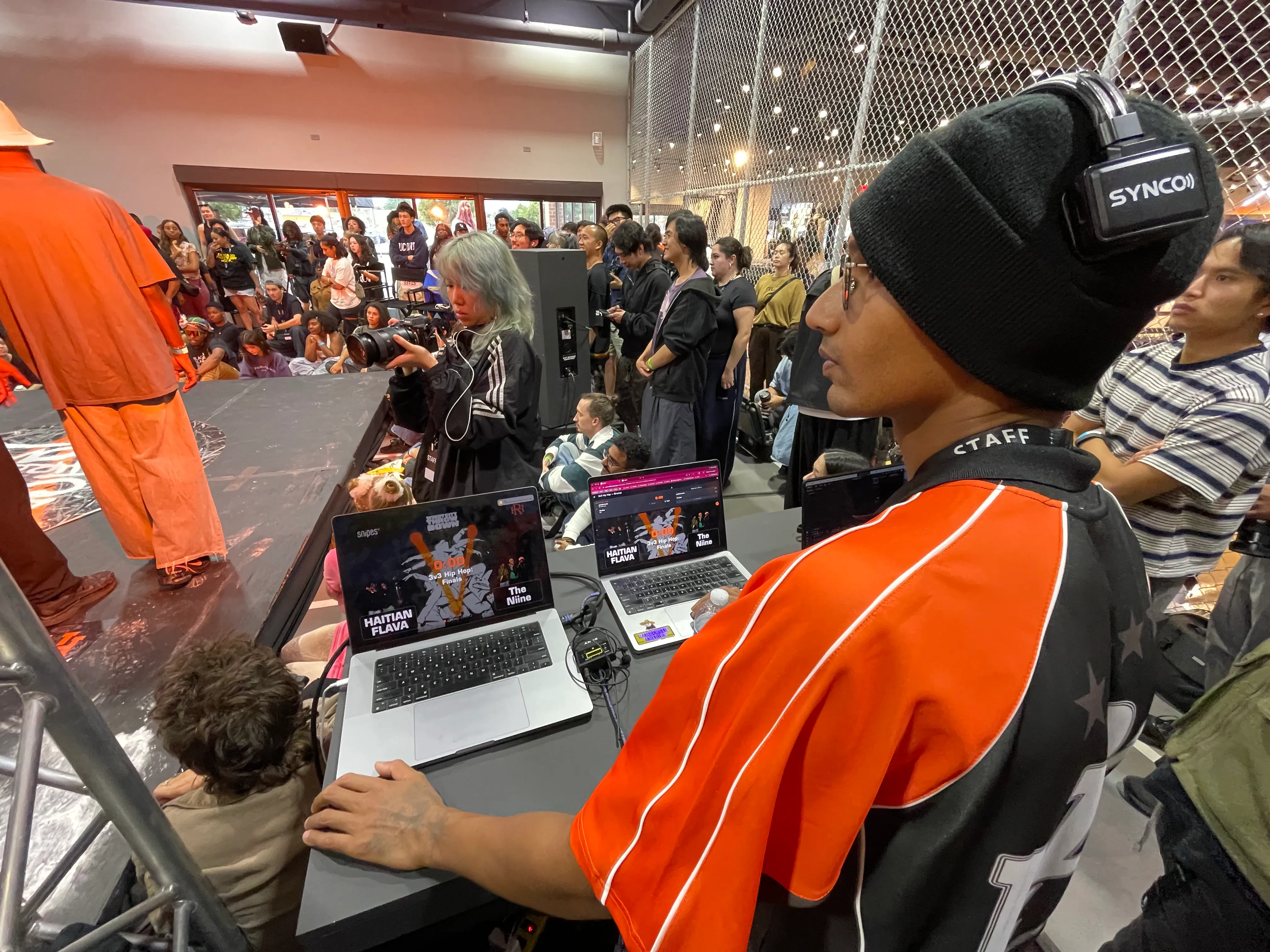
I knew this well in advance but assumed I would be able to sneak in my freestyle while I was working. At the last minute, I learned that I physically would not be in the same building as Footwork Frenzy…
This article goes into the process of building for Windy City Throwdown. In it, I walk you through my product development flow and how I’m using AI to build anything and everything for my community. In the interim, I did want to share some progress in my freestyle journey. Check out how much I improved from the beginning (left) to the end (right) 3 weeks later:
Start: Jul 22
End: Aug 12
There’s so much I need to improve: although I like the start of my “end” freestyle and I have a nice groove at the beginning, I kind of get lost halfway through and default to “movement vomit”. In addition, I need to feel more comfortable with a greater variety of moves - I default to the same foundational movements that I feel best at (if you ever see me over-using loose legs in real life, feel free to punch me).
At the same time, this is progress! You can see more confidence in the second video: I’m thinking less and connecting better with the music, and there’s less stiffness in my movement.
Even after Windy City Throwdown passed, I’ve continued to use the tool I built to track my practice. I recently also added a streaks feature for myself, to ensure that I make my practice into a daily habit. If I can improve this much in 3 weeks, I’m so excited to see what I can do after another decade of this.
Parting Thoughts
If you’ve ever wanted to get into dancing, I hope this article inspires you to take that first step. In fact…if you’re in Chicago or NYC, I actually have an app for you.
But even if dancing isn’t your cup of tea, I hope this article still inspires to try SOMETHING new. No matter what you want to learn, the approach of:
- Analyzing
- Strategizing
- Executing
Is all you need to achieve any goal in front of you!
Finally, if you’re motivated technically, the tools available today make it (almost) trivial to build anything you want for yourself. The dance tracker I made for this took about 3 days to finish (including UI refinements!), and it was invaluable in keeping me on track and inspiring me to continue dancing even after WCTV! It’s exciting to see how I’m able to integrate my tech passions along with the other interests in my life, and I’m stoked to see what I (and others!) build in the future.
Lastly, as a thank you, I leave you with the earliest video of my dancing that I could find. Please be nice - this was a…rough start.
That being said, if this guy can learn to dance, anyone can.